Stop Spreading Yourself Thin: The Real Price of Being on Every Platform at Once
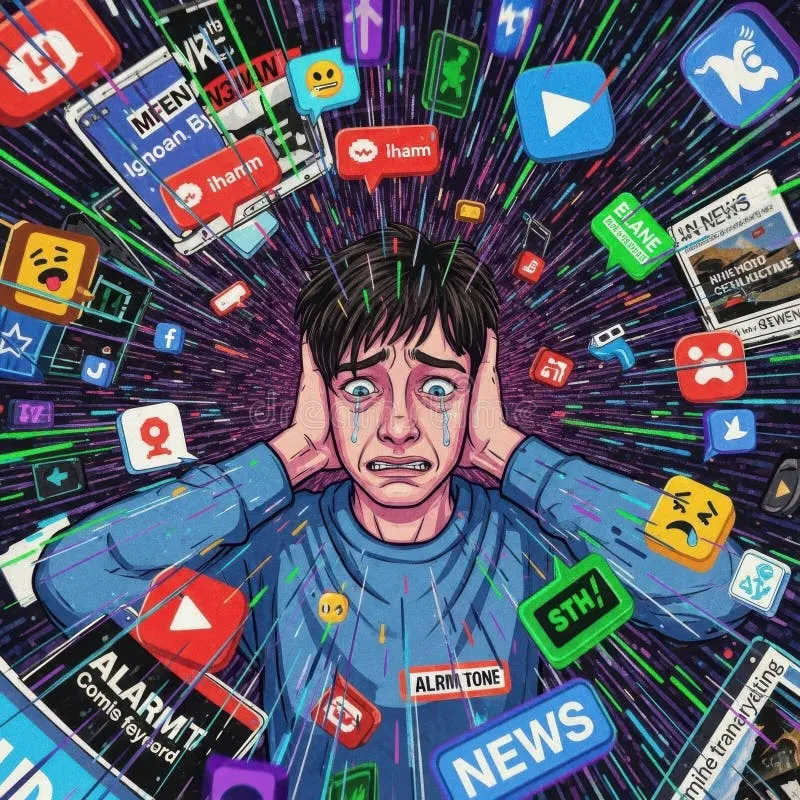
Photo: overwhelmed entrepreneur surrounded by social media icons and devices, via thumbs.dreamstime.com
There's a particular kind of hustle that looks productive from the outside. You've got a newsletter, a podcast, a TikTok, an Instagram, a YouTube channel, a LinkedIn presence, maybe a Substack on the side. You're showing up everywhere, staying consistent, grinding the algorithm. From the outside, it looks like a business. From the inside? It often feels like running on a treadmill that someone keeps speeding up.
Here's the uncomfortable truth that most growth gurus won't put in their pitch deck: being everywhere is a business expense, and most people aren't accounting for it.
The Illusion of Omnipresence
The multi-platform strategy became gospel somewhere around 2019, when platform volatility started scaring creators into diversifying their audiences. And to be fair, the logic made sense at the time. If one algorithm tanks your reach, you've got five others keeping the lights on. Reasonable. Defensive. Smart, even.
But somewhere along the way, diversification stopped being a risk management tool and became its own kind of obsession. Entrepreneurs started chasing presence for the sake of presence. And that's where the math starts falling apart.
Consider what researchers have documented about cognitive switching costs. Studies from the American Psychological Association suggest that shifting between tasks — even mentally — can cost up to 40% of productive time. Now apply that to a creator who's writing a blog post, shooting a Reel, scheduling tweets, recording a podcast intro, and responding to YouTube comments, all in the same afternoon. The output looks impressive. The actual value generated? Often far less than the hours invested.
What Context-Switching Is Actually Costing You
Let's get specific. Say you're a small business owner spending two hours a day managing your social presence across five platforms. At a modest freelance rate of $75 an hour, that's $150 a day in opportunity cost — time you could've spent on client work, product development, or sales calls. Over a month, you've quietly written a $3,000 check to the algorithm gods, and most of that spending never shows up in a budget spreadsheet.
And that's before you factor in the tools. Scheduling platforms, analytics dashboards, video editing software, graphic design subscriptions — a mid-tier creator running a multi-platform operation can easily be paying $400 to $700 a month in SaaS fees alone. Add in the mental overhead of staying current on five different sets of best practices (because what works on LinkedIn is actively counterproductive on TikTok), and you've got a full-time job that most people are treating like a side task.
The real kicker? For the majority of creators and small business owners, two or three platforms are driving 80 to 90 percent of actual revenue and leads. The rest is noise dressed up as strategy.
The Vanity Metric Trap
Part of what keeps people locked into platform overload is the dopamine loop of visible numbers. Follower counts, impression stats, engagement rates — these feel like business metrics because they look like business metrics. But impressions don't pay invoices.
A consultant with 800 engaged LinkedIn followers who regularly converts readers into discovery calls is running a more profitable operation than someone with 50,000 Instagram followers who can't convert a single sponsored post into a client. Yet the second person feels more successful because the numbers are bigger. That's the attention tax in action — you're paying in time, money, and mental energy for metrics that make you feel busy without making you profitable.
This isn't a knock on social media as a category. Platforms are genuinely powerful distribution tools. The problem is treating distribution like it's the same thing as business development.
Where Focus Actually Pays Off
Some of the most quietly successful entrepreneurs in the US right now are running what you might call minimum viable presence strategies. They've identified one or two platforms where their specific audience actually hangs out, gone deep on those, and let the rest go dark or on autopilot.
A B2B software founder might go all-in on LinkedIn and a weekly email newsletter, ignoring TikTok entirely. A fitness coach might build everything around YouTube and a private community, skipping Twitter and Facebook. A boutique retailer might find that Pinterest and a well-maintained Google Business profile drives more foot traffic than a full social calendar ever did.
The data backs this up. A 2023 report from HubSpot found that businesses publishing more than 16 blog posts per month saw only marginal traffic gains over those publishing four to eight — but spent significantly more resources to get there. More isn't always more. Sometimes more is just more expensive.
How to Audit Your Own Attention Spend
If you're not sure whether your multi-platform strategy is working for you or costing you, here's a simple exercise. For every platform or channel you maintain, ask three questions:
- Where did my last five paying customers or clients actually come from? Not where they follow you — where they first found you or made the decision to buy.
- What would happen to my revenue if this platform disappeared tomorrow? If the honest answer is "not much," that's useful information.
- What's the fully-loaded cost of maintaining this presence? Time, tools, mental energy, and the opportunity cost of what you're not doing instead.
Most people who go through this exercise come out the other side with a shorter list of platforms and a clearer sense of where their energy actually belongs.
The Permission You Didn't Know You Needed
Here's something the internet rarely says out loud: you are allowed to not be on every platform. You don't need a TikTok if your customers are 45-year-old purchasing managers. You don't need a podcast if you hate talking into a microphone. You don't need to post on Instagram every day if your best leads come from referrals and LinkedIn DMs.
The attention economy wants you to believe that visibility is the same as value. It's not. Visibility is a means to an end, and when it stops serving the end, it's just overhead.
The smartest business move a lot of creators and entrepreneurs could make right now isn't launching another channel. It's shutting one down, redirecting that time and money toward what's actually working, and measuring results in revenue instead of reach.
Being everywhere is expensive. Being somewhere that matters? That's how you actually build something.