Fifteen Minutes Worth More Than a Million Streams: The Case for Respecting the Opening Act
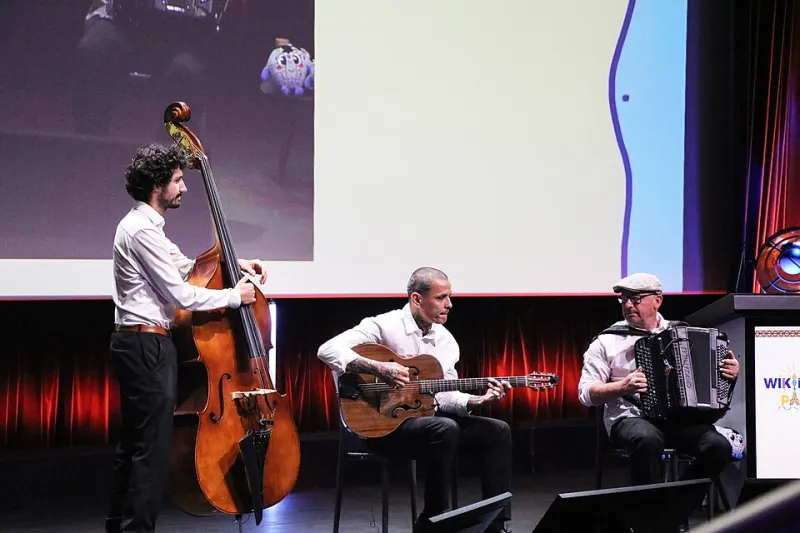
Photo: Taty2007, CC BY 4.0, via Wikimedia Commons
Let me make an unfashionable argument: the most important person in an emerging artist's career is not their producer, their label rep, or the algorithm. It's whichever tour booker decided, on some Tuesday afternoon, to put them second on a seven-date regional run.
The Math Nobody Brags About
A 15-minute opening slot in front of 2,000 strangers who didn't come to see you is, functionally, the highest-value marketing opportunity in music. Streams can be bought, faked, or ignored. A live audience can't. You either hold the room or you don't, and everyone backstage can tell which happened.
The pipeline is beautifully old-fashioned. A local venue curator books a promising act. A headliner's manager catches the set or hears about it. A support slot gets offered. The opener converts a fraction of the headliner's audience into fans. Repeat at escalating venue sizes until you're the one picking openers. Almost every breakout act of the last four decades rode some version of this ladder — and almost none of them will admit how much of it was one well-placed slot.
Why the Ladder Is Cracking
Here's the problem, and it's structural. The middle of the touring economy is collapsing. Club venues — the rungs of the ladder — are closing at an alarming rate across the US, squeezed by rising rents, insurance costs, and post-2020 debt. Meanwhile, touring costs have ballooned while emerging-act support budgets haven't. Headliners who once brought two openers now bring one, or a DJ, or nobody.
At the same time, the industry's attention economy rewards artists for building streaming numbers before touring, which inverts the old logic. Bookers increasingly want proof of audience rather than potential — which means the artists who most need a slot are the least likely to get one. That's not gatekeeping anymore. That's a drawbridge.
What We Lose When the Pipeline Breaks
Streaming flattened discovery, and we were told that was democratization. Maybe. But discovery-by-playlist is shallow; discovery-by-opening-set is deep. You don't become a lifelong fan of an artist from a 30-second clip. You become one when they win over a hostile room, when you watch them earn it in real time. That experience — uniquely American in its scale, given our venue circuit — is how scenes form. And scenes, not singles, are what sustain careers and cities alike. Ask Austin. Ask Nashville. Ask what happens to a mid-sized city when its last independent club shuts down.
What Should Happen
A few fixes aren't complicated. Headliners with leverage could commit to booking genuine openers — not friends, not openers-with-streams — as a norm, the way some already do. Bookers could reserve a percentage of support slots for unproven local acts, treating it as R&D rather than charity. Fans could do the radical thing and show up on time.
None of this is sexy. All of it is cheaper than the alternative: an industry where nobody new gets a room to win over, and every artist arrives pre-verified by metrics that measure attention but not devotion.
The opening act isn't a warm-up. It's the apprenticeship the music industry forgot it runs. Save it.