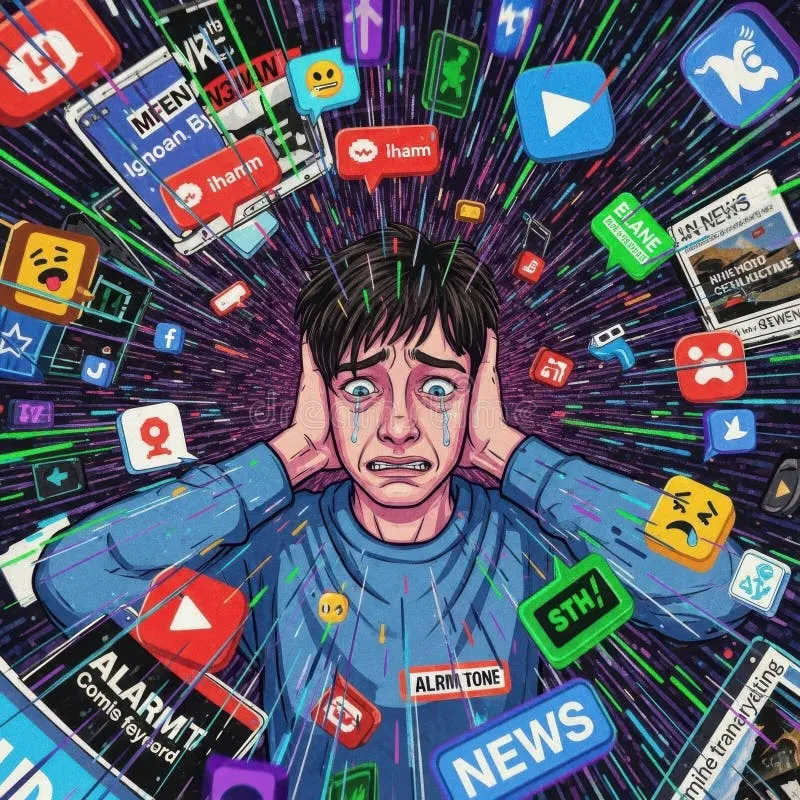
When Polishing Your Image Becomes a Full-Time Job Nobody Hired You For

Photo: Unknown authorUnknown author or not provided, Public domain, via Wikimedia Commons
Somewhere between the fourth LinkedIn post of the week and the third wardrobe change for a "candid" Instagram photo, a lot of professionals are stopping and asking themselves a genuinely uncomfortable question: Is any of this actually working?
Personal branding was supposed to be the great equalizer. No PR firm? No problem. Build your own audience, control your own narrative, and watch the opportunities roll in. And sure, for some people — the early adopters, the genuinely charismatic, the ones who happened to catch a wave at exactly the right moment — it delivered. But for the majority grinding through content calendars and aesthetic audits in 2024, the return on investment is starting to look pretty grim.
The Hidden Tab Running in the Background
Let's talk about what personal branding actually costs, because most of the people selling it to you have a vested interest in keeping that number blurry.
There's the obvious stuff: graphic design tools, scheduling software, maybe a ring light and a halfway decent microphone. Those line items are easy to spot on a credit card statement. What's harder to quantify is the time — and in the American professional landscape, time is the most expensive thing most of us own.
A mid-career consultant spending two hours a day on content creation, engagement, and brand maintenance is effectively running a part-time media operation on top of their actual job. At even a modest billable rate, that's thousands of dollars a month in opportunity cost. The content might generate some visibility. But visibility, as anyone who's built a following and still struggled to pay rent will tell you, isn't the same thing as revenue.
Then there's the cognitive load — the constant low-grade anxiety of wondering whether your last post landed, whether your "brand voice" is consistent enough, whether you're being relatable but not too relatable, professional but not too stiff. That mental overhead doesn't show up on any spreadsheet, but it absolutely shows up in your work.
The Relatability Trap
One of the stranger ironies of the personal branding era is how hard people work to appear effortless. The "authentic" aesthetic — the messy desk shot, the vulnerable caption about a tough quarter, the self-deprecating humor strategically deployed to seem more human — is itself a form of performance. And audiences are getting sharper about spotting it.
There's a reason some of the most trusted voices in any given industry right now are people who barely post. They show up when they have something genuinely worth saying, they say it without a content strategy attached, and then they go back to doing the actual work. That restraint reads as confidence. It signals that they don't need your attention — which, paradoxically, tends to make people want to give it to them.
Over-curation, on the other hand, creates a kind of uncanny valley effect. Everything is too smooth, too consistent, too on-message. It starts to feel less like a person and more like a brand mascot. And nobody really trusts a mascot with their business decisions.
What Selective Authenticity Actually Looks Like
The professionals finding the most traction right now aren't abandoning their public presence — they're being a lot more intentional about what they put into it. Call it selective authenticity: the practice of showing up meaningfully in fewer places rather than showing up everywhere all the time.
In practical terms, this might look like one genuinely substantive newsletter a month instead of daily social posts. It might mean contributing a well-argued op-ed to an industry publication instead of chasing algorithmic trends. It might mean letting a few months go by without posting anything at all, because nothing worth posting happened.
This approach requires a tolerance for silence that goes against every piece of conventional content advice out there. The standard wisdom says consistency is king — that the algorithm rewards frequency, that audiences forget you if you disappear. And there's some truth to that in certain contexts. But it also assumes that your goal is algorithmic favor, which is a very different thing from professional credibility.
The Saturation Problem Nobody Wants to Admit
Here's the uncomfortable backdrop to all of this: personal branding as a strategy made more sense when fewer people were doing it. In the early days of LinkedIn thought leadership or Twitter expertise-signaling, standing out required relatively little. The bar was low, the competition was thin, and a consistent posting schedule genuinely could build a meaningful following.
That market is now extraordinarily crowded. Every industry has dozens — sometimes hundreds — of people producing content on the same topics, using the same frameworks, hitting the same emotional beats. The signal-to-noise ratio has collapsed. And in a collapsed signal environment, more volume doesn't help you. It just adds to the noise.
What cuts through isn't frequency or aesthetic consistency. It's genuine expertise communicated without apology, a willingness to take positions that might alienate some people, and the kind of track record that doesn't need a content calendar to prove itself.
Auditing What You've Actually Built
If you've been investing heavily in personal branding, it's worth doing an honest accounting of what you've gotten back. Not in terms of followers or engagement rates — those numbers are famously easy to game and notoriously hard to convert — but in terms of actual business outcomes.
Did a client mention your content as a reason they reached out? Did a speaking opportunity come through because of your online presence? Did a partnership materialize because someone had been following your work? If the answer is regularly yes, you've built something real. If the honest answer is mostly no, you might be running a very expensive hobby.
None of this means personal branding is useless. For certain industries, certain career stages, and certain types of work, a well-maintained public presence is genuinely valuable. But the question worth asking isn't "how do I build a better personal brand?" It's "does building a personal brand actually serve what I'm trying to accomplish — and at what cost?"
The professionals who seem to have figured this out aren't the ones with the most polished feeds. They're the ones who decided their time was better spent getting really good at something, and trusted that the reputation would follow.